Chemical Looping System

This shows the structure, fluid flow, and reaction equations of “B&W’s Bright loop Chemical System” for producing hydrogen from biomass. The Chemical Looping System consists of three reactors: a fuel reactor, a hydrogen reactor, and an air reactor. An iron oxide catalyst circulates inside the reactors as a catalyst and oxygen source. During the initial start-up of the reactors, combustible gases such as city gas or propane are temporarily used to raise the reactor temperatures. The reactors operate at a total temperature of approximately 880 to 1,100°C.
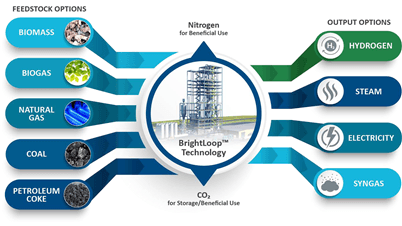
Using biomass, natural gas, coal, etc., you can select and produce one of hydrogen, steam, electricity, or synthesis gas, and recover high concentrations of carbon dioxide for resource utilization.
1. Fuel Reactor
 
When fuel is injected into a fuel reactor containing incinerated oxygen carrier particles, heat is generated, and CO2 and water vapor are produced and emitted. The oxygen carrier particles, iron trioxide (Fe2O3), react with the fuel to be reduced to ferrous oxide (FeO) and move to the bottom of the reactor. The primary purpose of the fuel reactor is to heat the reactor and produce carbon dioxide. The main reactions occurring in the fuel reactor are as follow:
 
Fuel + Fe2O3 —> CO2 + H2O + 2FeO

2. Hydrogen Reactor
 
The hydrogen reactor is located at the bottom of the fuel reactor. FeO descends from the top, and steam is injected from the side. During this process, the high-temperature FeO is partially oxidized with oxygen in the steam molecules to convert into Fe3O4, releasing hydrogen before moving to the bottom. A key feature of the hydrogen reactor is that the hydrogen is not produced from the fuel, but rather through the decomposition of water vapor.
 
3FeO + H2O —> H2 + Fe3O4

3. Air Reactor
 
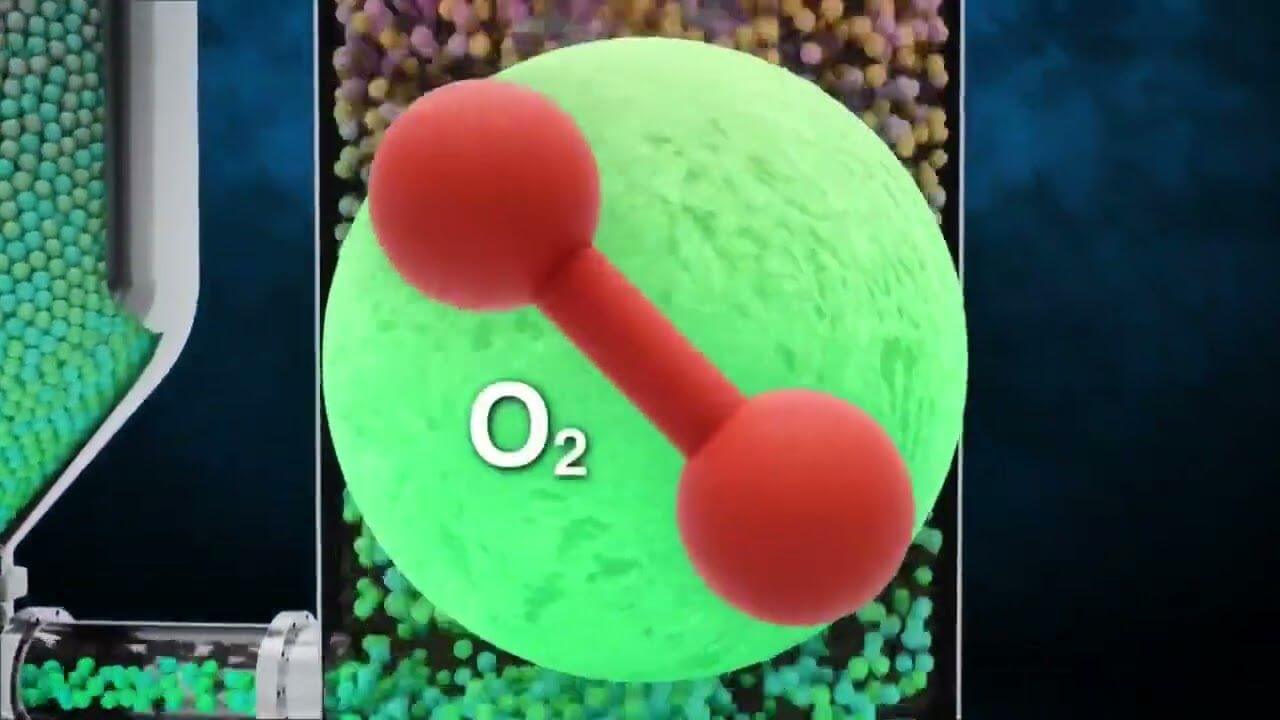
In the air reactor, partially oxidized iron tetroxide (Fe3O4) is injected from the bottom of the hot air and moves to the top of the reactor powered by rising air, where the reaction proceeds and it is oxidized to Fe2O3. The Fe2O3 that has moved to the top of the reactor then enters the fuel reactor. The air reactor performs the function of regenerating the iron oxide catalyst. In this reactor, as the oxygen contained in the injected air is consumed, nitrogen is concentrated and emitted.
4Fe3O4 + O2 —> 6Fe2O3